
-
DAMNATION: A SELF-PORTRAIT

Within the vast suburbia of Hell,
Sequestered in his dingy, private cell
(Which lacked a window or a padlocked door),
Our reprobated hero paced his floor.
Not his the gaudy blaze of punishment
For those whose lives in cruelty were spent;
Titans of wickedness whose earthly years
Could rightly measured be in others’ tears,
Whose lust to dominate, whose greed for gain
Makes them the heirs of everlasting pain –
No, this lost soul, all snug to self within
Was but a dull banality of sin.
Externally, throughout his mortal course
He caused but little woe nor show of force,
No avaricious star ruled o’er his life
(Though lust and gluttony were somewhat rife),
No smoking crater hot with human ruin –
Except the rancor that he chose to stew in.
He hoarded petty anger like a miser
And belched his bitterness just like a geyser,
Assailing (when he could) his neighbor’s ear
(Oft deaf to ranting tedious and drear).
But mostly was his bilious vocation
Employed in theaters of isolation;
Erupting in a flagrant ecstasy
Of fury in pathetic privacy.
Who knows that he might have become a saint
Except he mastered deftness of complaint.
His virtue was resentment in full spate,
He knew no other holiness but hate.
Now back and forth he’s worn a little path
And yammering, he monologues his wrath
With rotten teeth, all shattered shards and chips
That cut the air expelled through bleeding lips.
His jeremiads make his mouth run dry,
A tongue of desert sand begets his cry.
Such grisly maladies are no distraction
Nor do they mollify his spleen’s protraction.
Although the flames of Hell consume his brain,
His mind is scorched; his body feels no pain.
Rooted to grudges and hostility,
The flower of his wrath’s fertility
Shall blossom fully for eternity.
And like a sorcerer, in his hot zest,
Upon his dungeon’s walls makes manifest
The icons of his rage, the which he reams
With swollen, deathless symphonies of screams.
All those he knew on earth (or nearly all)
Have silent portraits hung, at which he’ll bawl
Perpetual tsunamis of rebuke
As fierce and odious as arcs of puke.
And all this rabid stream of vehemence
Has long ago lost every eloquence:
His diction has decayed to entropy
And gibberish of animosity.
A vocal vitriol devoid of speech
A raw and venomous eternal screech.
The principle of Hell is mindless passion;
The damned enact it after their own fashion.
As he pours forth his fury and reviles,
His muted audience with Zen-like smiles
Expend no energy his barbs to parry;
Make no protest, defense, nor commentary,
Nor offer any reconciliation,
Nor sheer contrition to his fulmination.
These, wordless in his house of endless night,
Withhold responses to his spray of spite:
He rests assured (at least) that HE IS RIGHT.
Through all the corridors and rooms of Hell
Such righteousness rings out just like a bell,
Declaring all his anger like a creed,
His teeth and tongue and lips forever bleed.
-
TWO POEMS
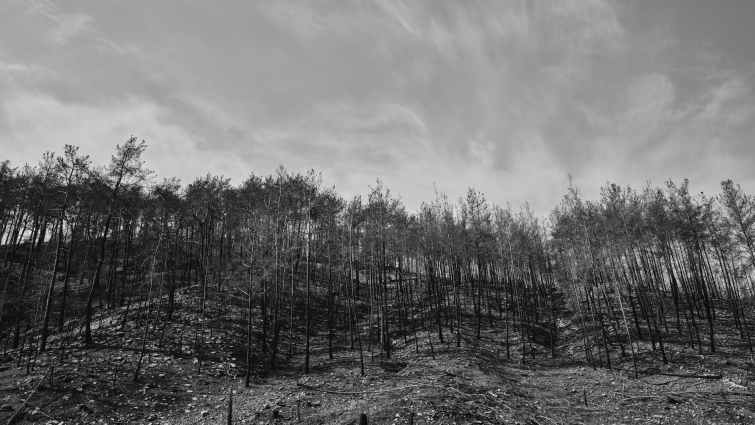
ASH IS THE QUINTESSENCE
A universe of verdant tapestry
Outpaces each horizon’s mammoth rim;
The multitudes of lavish forestry
Shall make a soul with wonder overbrim.
Then beauty breathes its last as horror blooms
Into a vastness of great sylvan gore,
A dread arboreal expanse of tombs
That usher forth a mimicry of war.
Warfare itself shall gape with jealous awe
At Nature’s sheer, flamboyant suicide:
Devouring herself with flaming maw,
Trees’ bones picked clean that strew a countryside.
Death’s angel went on brutal holiday
Four years ago, and smote the living trees
As he did ancient pagan armies slay
Which menaced Israel with savageries.
As gray as newspaper and just as dead,
A haunting desolation conquers sight:
Charred skeletons whose flesh inferno fed
Upon to sate demonic appetite.
A generation hence, the flesh regrows
And leaf and bloom and sundry beasts shall dwell
Amid such picturesque and grand repose
Which germinated from the fires of hell.
APPLE BLOSSOMS
What luscious tufts of silk
Or clumps of virgin snow
Immune to heat!
Such bristling blades of milk
That grow
Along a city street.
Pieces of clouds on high
Shall nest on a green bough
With fragrance fair.
Expatriates of sky
Allow
The earth the grace of air.
This bridal ornament,
That weds a pomp with such
Simplicity,
Proclaims through sight and scent
And touch
A soft sublimity.
The nascent summer’s pennant
Sandwiched between the cold
And torridness;
But a fortnight to tenant,
Unfold,
And wilt to nothingness.
Yet death of these is bliss;
A prospect cheers the heart –
Autumnal treasure.
Sweet as a lover’s kiss
And tart
As lover’s sharp displeasure.
Rubies from pearls transmute
When summer wanes to cold.
The tomb of flowers
Becomes cradle of fruit –
Behold
The trove of Nature’s powers!
-
THE OLD MAN AS A MIRROR
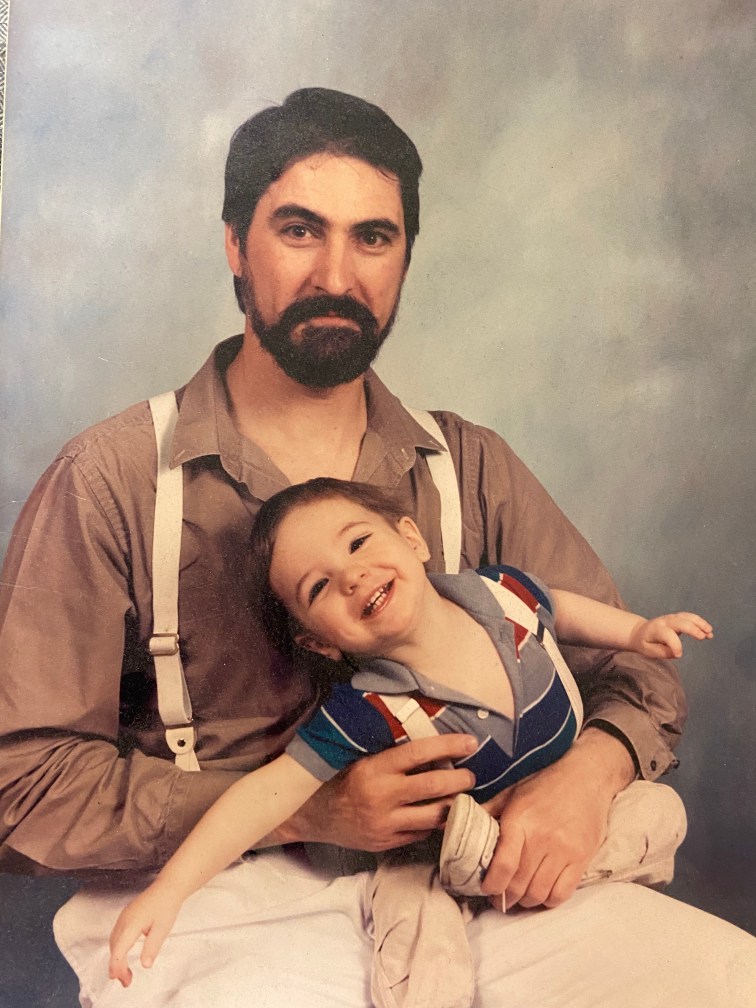
I see before me now a glimpse of my life in the late 1980s. I see myself as I was then: dark-eyed with a full head of brown hair; grinning like a goober; my whole body splayed out to encompass my already massive personality; clad in suspenders, a striped polo shirt, khakis, and sneakers, and cradled in the strong arms of a man who loves me. That man is himself in suspenders and khakis, wearing a long-sleeve taupe shirt. He is handsome and wiry, with jet-black hair and beard, green eyes and a nose that would rival a Roman emperor’s, his face painted with the pained but gleeful rictus of someone who must manage a toddler on a daily basis.
Due to my balding head and fifty pounds of excess weight, I find it often difficult to see the resemblance between myself and the thirty-nine-year-old in this photo, but everyone who sees it swears up and down that I look exactly like my father. If I was skinnier and put on a hat, perhaps, but it is more than obvious to anyone who knows the both of us that the bulk of my personality is a mirror of his; despite some inheritance of my mother’s traits, I take enormously after him. And yet it is a paradoxical but all-too-common fact of the human universe that similarity breeds contempt. That mirror can be a window into everything we find horrible and ridiculous; and two fires, burning with equality, which join together will create an inferno that destroys all it touches. Thus, despite the love between us as shown in the picture mentioned above, a love which from his end never wavered in its own sort of authenticity and ardor, the reality of our likeness is frequently sobering and even dreadful.
He was a volatile narcissist who was repeatedly cruel to his wife and children and obnoxious to his peers, acquaintances, and clients. Aside from a few “drinking buddies,” he had almost no friends by the time of the illness that rendered him helpless and senile (he is at the present still living, peaceful and relatively content). He was childish and fragile, prone to tantrums and regular outbursts of outlandish and cutting verbal abuse when he wouldn’t get his way, as if he had never been introduced to a sense of proportion and standards of courtesy. He regularly had an open relationship with reality and gave himself airs of infallibility that would embarrass a pope. Thus, every point of contention, no matter how insignificant, was a hill he would die on and die screaming, taking the other with him. Tension was the constant rule in our household, with regular bouts of trauma and terror. The germs of these horrors (and, indeed, the occasional blossom) I can often find in myself. It would not be inordinate of me to say that I feel blessed and grateful that I am not called to bring up a family lest I transmit unto another generation the woe in which I was raised.
And yet for all the years of such vicious conduct, I cannot be too stern with him looking back on his parenting. He was a deeply wounded man with oozing sores on his soul that were never salved nor bound. He was brought up in great poverty, he never knew his biological father, and immediately after high school he did a tour in Vietnam for three years. I know relatively little of his life before I entered the picture, but the aforementioned facts (combined with a few other painful experiences of his which I will not mention) inform me enough of the misery of the three quarters of a century he has spent on earth. He was not a monster; he was a tortured soul. He was not evil; he was tragic.
He was also not without his own talents and graces. He was a highly intelligent and even sophisticated man, he had a proficient grasp of wit and irony, he was a hard worker, he was a skilled architect, and a maestro in the kitchen. He passed on to me everything from a love of cooking to a love of science fiction, and nearly every element within myself that could be described as “academic” or which aspires to a cherished appreciation of “higher culture” I get from him. But more than all of these (and not to excuse or gloss over what was previously stated) he had undeniably good qualities as a father. I return to the photo mentioned above: this image is no pantomime, no charade to mask some horrible and immutable darkness void of familial love. The man loved me and loves me still; he never failed to say so. Despite his barbarity, he was also a tender and affectionate parent, even doting. He was warm and never stingy about dispensing hugs and kisses. Though withering in his criticism, he was also lavish with praise, and he never ceased to be proud of me. He was solicitous and generous to the point of being foolhardy, but this is an excess of a virtue, not an absence of it.
In childhood, he was my hero; my regard for him was quasi-idolatrous. For much of my adolescence and twenties, he was my Antichrist; I have never in my whole life despised someone so much as I have him. These days, while I by no means idolize him, I have no more hatred for him, either. Admittedly, certain flashes of memory can give me moments of acrimony, but these pass quickly enough and I find that I have some fondness for the old man. And now with his senility and his most definitely being in the twilight of his years, I miss the interactions we would have. I miss his wit and sense of humor, I miss the conversations of high intellectual value that were sometimes ours, I miss watching TV and movies with him. I even miss getting drinks with him, despite the poor fool not being able to hold his liquor as well as his son and his being a rather tedious drunkard past a certain point. As was aforementioned, I take enormously after him, and when he makes his exit from society, there will be no one on earth quite like me as he is. Though some of my resemblance to him worries or embarrasses me, I’ve also learned to correct the vices of his heredity, to emphasize his virtues, as well as to express qualities I receive from other influences. Thus, I mimic his pomposity but also check it with self-deprecation; I am resolute in my beliefs without being dogmatic; I can be funny and charming without sucking all the oxygen out of a room; I revel in my nerdy obsessions and eccentricity without alienating people. From him, I get an equal thirst for refinement and vulgarity, a thrill to show off and entertain, and a yearning to smother those dear to me with syrupy affection – all a decent starting place for my character.
For nearly two decades, my similitude to the old man made me shudder and quest to purge myself of all traits passed down to me from him. A futile endeavor, as I cannot help being who I am, and who I am is very much a facsimile of my pater. But futile also because it springs from a misunderstanding of what it means to inherit from one’s parents, as such inheritance is something to neither reject nor cling to. They are merely the base elements from which we construct our own identity through the action of our will and the environs of our own experience. If I’m placed in a run-of-the-mill kitchen and enjoined to make a meal with whatever is in the cupboards and refrigerator, I am of course limited by what’s available, but what I create will be the result of my own choice and creativity. What someone else will make, placed in the same situation, will be entirely different. And though I may wish to make pasta for the starch when there is none to be had, fried potatoes are nonetheless suitable; rather than lament the absence of ginger, I can accept cinnamon as a fine substitute. But this culinary analogy is insufficient – in real life, we bring outside ingredients for the recipe of our personalities beyond what our family provides: from teachers, peers, religion, society, books, movies, music, careers, etc. Our kitchen is the world entire.
I will always be radically like the man who sired and raised me. But the basics I get from him are not all bad, some of which I express with enthusiasm. That which I suppress I can replace with other influences. Indeed, I can manifest other facets of my character from my own free creativity. But the foundation of myself was crafted, one way or the other, by a particular architect. This I cannot escape, nor do I need to. In many ways, I have risen above his mistakes and I also cherish his gifts. I must also face the fact that he has seen more sunsets than he’ll see, and so I hope that when “passing from Nature into Eternity” he may, through God’s mercy, obtain a final and everlasting pardon, joining the citizens of heaven. From there and through his intercession, he may do more perfectly above than what he did for me on earth below: love me, look out for me, assist me, and guide me to fulfillment of myself in this life and into the bliss of the next.
-
Musings on a Certain Dichotomy

Which is the finer: sunrise or its setting?
But that’s like asking which is prettier,
The face or its reflection in a mirror?
The pageantry of saffron, rose, and then
Magenta hues drowns every entity
On earth with the cascading, gaudy wrath
Of an artistic God, and the grand sun
Shall riot at each bookend of the day –
Light twisted by geometry and air.
Is it the flight of stars or their return?
To gain the heat of day or greet the cool
Of eventide? Its flourish or its fading?
The shadows shrinking or their elongation?
Excitement for the new day’s birth engenders
The jolts of giddiness for ripe potential
To be seized, harvested as action’s fruit.
As air to lungs, so daybreak to the soul;
An easterly exuberance pours forth.
But oh, when limbs and mind hum with fatigue
The gentle rapture of the drowsy sun
Wafts a narcotic poetry into
The weary spirit, foreplay instigating
Before sleep’s embrace and the bliss of dreams.
It makes us cherish vast horizons more
As beauty strolls to shine on other lands
And legions of tomorrows flirt with us
In splendor as the future gives a wink.
Admittedly, I have to catch my breath
When sunshine climbs the mountainous partition
That bars the orient from human view
And paints a city with a golden flood.
But when my eyes are seared by western fire
That makes the sky a monolithic ember
There is no tongue to speak nor strings to strum
That can unfold the yearning that will bloom
Within my heart to watch the daylight’s pyre.
-
SOME NEW POEMS

AURORA
The sun will still excite the sky
Despite the inky veil of night,
Enrapturing the mortal eye
With glowing tapestries of light.
Apollo shuttles burning thread
To weave through Earth’s magnetic loom
As weft and warp cross overhead
Make dancing fabrics in the gloom.
The rainbow is a candle flame
To this inferno in the heaven;
The sun’s monotonous and tame
As through its course it’s slowly driven.
An emerald yields to azure hue
Then twists into a violet whirl.
From time to time there’s crimson, too,
And ghostly swathes of vibrant pearl.
Uplifted is the human gaze
That will through frosty midnights mark
Ribbons of luminescent rays
Which cast a shadow in the dark.
***
APOSTASY
Backtracking over Jordan, ever growing
Nostalgic for some golden baby cattle;
Sick of seeking for milk and honey flowing,
Too much of meeting heathens in a battle.
In turning Egyptward, I’m pining, longing
For former shackles’ iron consolation
Where there’s enough to eat; but here, prolonging
Of wandering and risking my starvation.
Floods of the Nile exceed the desert sand! —
The latter parches my desire to roam;
I’d rather dwell in slavery at home
Then hunt mirages of the Promised Land.
I know of better reasons to perspire
Than chasing after clouds and poles of fire.
***
“I’M LESS YOUR SPOUSE AND MORE A FICKLE FLIRT”
I’m less your spouse and more a fickle flirt,
For I am wedded to inconstancy;
As eager plighting troth as to desert
Such solemn vows for fits of flagrancy.
My prayers, all sweetness, rise like incense smoke
When fortune and fair weather come to pass;
But I belch forth, to blister and to choke
In my distress, tirades of mustard gas.
I count the meagre atoms of my faith
And sound the void where fortitude should dwell –
Brittle resistance to that vexing wraith
That salivates to see my soul in Hell.
No hope except I’m copiously shriven
By You who thirsts to see my soul in Heaven.
***
MATURITY
Does age lament its lost enthusiasm
Or does it mourn eroded beauty more
In gazing o’er the ever-widening chasm
Of yesteryear, what’s hopeless to restore?
Is it regret for sordid follies done
In Youth that more excites our breath to sighs
Or else suspiring, as our life has run,
For halcyon delights we used to prize?
The thrills that give the younger age its savor
And paint sensation’s hues in rosy blush
Decay into a stale, insipid flavor
We chew despairingly as ashen mush.
Thus, faced with Youth’s resplendence fair and bright
Our envy rears its ugly head in spite.
-
From the Other Side of the Abyss
The following is a letter composed to my younger self as I was ten or so years ago, in my late twenties. I was at that time, and had been for a while, a militant atheist and a wastrel squandering my potential. This letter’s aggressive tone should be considered in light of it being written to myself at a younger age, not necessarily to be directed at an entire demographic. -MJW
***
My dear young man,
You say that despite your spirited defense of your philosophy on life, you are by no means a poster child for secular humanism. I know what you mean by this, and in a sense it is true: your life is not an attractive one that others might wish to emulate. But in another sense, I find the declaration to be false and would regard you as the living and breathing logical outcome of your ideas. But I’ll leave this aside for the moment and treat with your assertion that you are not a good example of how one should live as an atheist. You have in your mind as the paragon of life and thought, Christopher Hitchens, of blessed memory. He was always living fast, always traveling, always writing, always in front of a camera, moving with grace between fabulous social events and the life of the mind. He was brilliant and glamorous. He also drank and smoked incessantly, which cut his life short at 62. (These hobbies you and I still both indulge in – perhaps some cessation is in order?) Given this, and given what you know of his character on and off the screen and page, how cantankerous, nasty, and arrogant he was, can we really say he was a man at peace with himself? But never mind that – that involves making a window into his soul. He could be described as living a happy and fulfilled life, but he was blessed with fame, wealth, and indomitable energy and industry. You have none of these things. You even lack nearly all the gumption and zest that your atheist peers practice to make lives for themselves. You have only the unflinching zeal of your opinions and life is passing you by. This is harsh of me to say, but can you really dispute me?
You say also that despite the absence of ultimate meaning or cosmic purpose, human beings can still find or create meaning in contexts limited to the good of our species, our society, our individual selves. This may be the case for those who actively pursue such, but who can say how they maintain their resolve in the face of unavoidable extinction or the myriad pain that racks them in countless ways? What meaning do they find in their suffering, loss, failure, disappointment, and boredom? Given the awareness of their inevitable death and utter non-remembrance by posterity, how do they uphold their joy in love, family, parenthood, friendship, art, political involvement, learning, discovery, nature, and career when all of these will be taken from them in death or often before their demise, chucked into the grave for which they themselves are bound?
I don’t quite know the answer to this question and, again, I can’t make windows into other people’s souls. But at a guess, I would imagine that most atheists keep two sets of books. One contains their stiff-upper-lip resignation in gazing into the void, while the other contains all the hopes, joys, aspirations, and loves which are magically sealed and preserved for some kind of mysterious ultimacy; that perhaps, deep down, there is some cosmic meaning after all – at least when it’s convenient to have such. This, of course, would be inconsistency. Or perhaps many just refuse to think about it at all. I couldn’t say, I can only guess.
But I don’t need to guess with you, my lad. You stare into the abyss with determination and claim great courage in doing so. But that millionth bong rip you just took gives the lie to any pretended fortitude on your part. Your life is one of constant, crushing despair, vacant of even the slightest spasm of attempting to live life to the fullest or to create meaning in the world. You sleep twelve hours a day, you spend almost all your waking hours drunk or high or in striving to possess the means for these activities. You want to be a writer – you even call yourself one – but you don’t write or work the soil of lived experience which makes literature grow and blossom. You hardly read but dare to call yourself a man of letters. You chase after meaningless sex (whose only reward is being able to boast of your tally of partners) and masturbate incessantly when deprived of someone to lust with. You are unhygienic, slovenly, bitter, opinionated, selfish, arrogant, resentful, and weak. I want to focus on that last adjective. You dream but make no effort, you indulge without constraint, you flee sacrifice and pain as if from a predator, and wallow in self-pity when they’re unavoidable. You shirk all responsibility, you take on no travail, you will not better yourself.
But at least it can be said that you live your life consistent with your beliefs, as I mentioned above. If the cosmos is so un-ordered as you believe it to be, if it is as parched of meaning as a desert is of water, why shouldn’t you live your days in smothering desolation punctuated only by the cheap pursuits of the cheapest sensuality, the which never bring you any real satisfaction? The horror of the reality that you profess is beyond, far beyond your ability to endure, so you conceal it from your awareness through pleasures of the flesh, but never being able to fully outrun it, you dwell in despair.
And so you should: “If there were no eternal consciousness in a man, if at the bottom of everything there were only a wild ferment, a power that twisting in dark passions produced everything great or inconsequential; if an unfathomable, insatiable emptiness lay hid beneath everything, what would life be but despair?” These words of Søren Kierkegaard put it as bluntly as it can be put and no evasions in response to it are acceptable. Let us not waste time with protests about how offensive such a challenge put to you is. It doesn’t matter what value or importance you assign to something or what greater cause you attach yourself to; the universe moved with vertiginous meaninglessness long before what you cherish came into being, and that same universe will spin and howl without purpose long after your darlings crumble into dust. Appealing to human beings to create their own meaning in a world bereft of it is diminishing the answering of the Big Questions to a matter of personal preference; your invented meaning has no more basis or validity than anyone else’s and even when you can agree with others about meaning, are you not, by your own standards, suffering from a consensual delusion? If there is no purpose to the world or to human life, playing pretend about it will not allow us to have our cake and eat it, too. You might as well pick your nose and give each booger a name, hoping they’ll develop personalities as you flick them into the trash and wish them well on their journey. Either the universe has purpose and human life has meaning, or they do not. You cannot split the difference.
And because everything you value has none to speak of, you are perpetually despondent as you can make no foundation for your values, nothing to press down on as you attempt to raise yourself out of depression and shallow hedonism to make something of yourself during your time on earth. Nor are you capable in the slightest of withstanding or making sense of suffering, which is the only guarantee in life. No, pain decidedly demonstrates the flimsiness of your philosophy as well as of your character; at the first sting you shrink into the cave of narcotic stupor and sleep the day away. Pain for you is the enemy, and not an enemy to be faced and combatted, but one to flee from in cowardice. It isn’t just that you cannot suffer nobly; you cannot even suffer at all. You float in an intergalactic void, your only companion being a sack of weed.
Despite my disagreement and despite what I see as their inconsistency, when it comes to atheists who do make room somehow for meaning in a meaningless world, I can admire their heroism and I can applaud their moral merit and accomplishment. Perhaps consistency in one’s beliefs is not as important as what the practice of said beliefs leads to. When an atheist is succeeding in life, or volunteering at a soup kitchen, or giving generously to their friends, or faithfully loving their partner of ten years, it might be best not to dig too deeply into their ideology but only to approve of the fruit that their lives bear. But Michael, my lad, your worldview is all too consistent, and you languish in the misery that is your due. I do not think it will be much consolation to you, this intellectual honesty. There are some remedies to your plight, one in particular that I would recommend. But your outlook on life is not exactly friendly to the Galilean carpenter, nor the heavy cross He offers us to bear. Perhaps in time you may change your mind; indeed, I’m hopeful for it. Until then, I am tremendously sorrowful for your lot in life, and as always remain
Your solicitous elder,
-Michael
-
Sketches of the Unrequited

The sun in his solitude, glowing above,
Called out to the moon, “Come hither, my love!
The sky is too vacant, to share it I’m pining.
We could fill all the heaven with both of our shining.”
But the moon she was bashful and fled from daylight
And hid in her refuge of comfort, the night.
The stars in their silvery radiance shone
But none were her equal, and she was alone.
By the shore waits a youth full of yearning who craves
The embrace of his darling who dwells o’er the waves.
Her letters are graceful and full of devotion,
But long has it been since the last crossed the ocean.
The dreams of the life that together they’d spend
With the dread of inconstancy ever contend.
One constant remains: that’s the ache of his heart
And a curse upon Fate that they ever did part.
The earth is alive with desire for the sky;
She pants for the kisses he drops from on high:
The torrent of passion he sends in a shower
To make her frame bristle with verdure and flower.
But the sky is stretched thin and routinely refrains
(In fatigue from his duty) from sending the rains.
He gives her the sunshine but leaves her without
The downpour she craves; she grows arid with drought.
A princess who’s fairer than all in the land –
Throngs of royals, nobility asked for her hand.
But she spurned all of those of her class and her tribe.
Her heart has one owner: a lowly young scribe.
“Let’s elope to a neighboring country,” she’d cry.
“We’d be safe from the wrath of the king we’d defy.”
But feeling unfit to provide for her need
And unworthy of love, he cannot accede.
The maelstrom of suffering, sin, and despair
Moved the pity of God to enact a repair.
Reviving humanity, sending His Son
To save all our souls and make evil undone.
He declared as His mission that none of our race
Exceeded the transforming grasp of His grace.
He taught and did healing, He scourged and He pardoned
He melted the hearts of great sinners most hardened.
He lived the Example as best as He could,
So they seized Him and flogged Him and nailed Him to wood.
-
Doubt and Education

“There is a very old saying: ‘When the pupil is ready, the master will appear.’
-Anthony Hopkins, The Mask of Zorro
I’m currently in the inchoate stage of starting a business. After several attempts in the past couple of years to get back to employment and thus ween myself off disability payments (attempts which have often ended with me falling on my face and embarrassing myself), I discussed the idea of becoming a freelance writer with my vocational counselor. She loved the idea and set me up with a self-employment consultant who has been working with me for several weeks now to construct a feasibility study and a business plan.
A business. I am going to be forming a business. That very sentence boggles my mind. As long as I could remember, I have never thought of myself as a man for business – indeed, I have often repudiated the idea to be as absurd as my becoming a basketball player, an astronaut, or a ninja. I had little desire for it and could find within myself even less ability or natural talent. I am a man of letters, not a merchant. The very ideas of haggling, advertising, marketing, or having employees underneath me made me mildly nauseous. And surely tax season for a business could make a bride fret on her wedding night.
But here I am, somewhat inadvertently, starting a business. But I don’t know the first thing about running an operation, even a sole proprietorship like the one I’m going to form. At first, I was anxious and full of doubt, seriously considering calling off the whole project and steeling myself to the prospect of trying to work yet another nine-to-five job. But a neighbor of mine counseled me to stay the course, saying “You fail at 100% of those things you never try.” So, I’ve decided to stick with it, and my anxieties be damned.
But nonetheless, as I said, I know nothing of forming or running such an enterprise, even one as simple and miniscule as mine. However, many weeks of business coaching are part of the plan, to say nothing of the world’s knowledge of this subject (or any other) being at my fingertips. I will be taught these things by someone with know-how. All that’s required of me is the nerve to commit and work. If someone is going to teach you how to swim, you first must take a plunge.
So many of us hold ourselves back because of our ignorance of various skills, our lack of understanding of various disciplines. We can then easily despair of any future accomplishment. This is folly; we may as well despair of the cold when a coat and scarf are hanging from a hook next to the front door. Teachers and resources for learning abound like dandelions in summer. We may not become PhDs (though some can), but we can take courses on YouTube, on Khan Academy, or any number of sites. We needn’t pretend to be experts; we need only strive to expand our knowledge, to grow beyond our present state. I know nothing of carpentry, but if I need to drive a nail through some wood I have several friends who can instruct me. Do I want to learn more about the history of Europe leading up to and including the First World War? There are plenteous documentaries I can find on YouTube, on Amazon, or elsewhere on the internet. Am I concerned about my health and potential illness? I can find out many things from my best friend, a doctor, who can also refer me to literature on the subject. Am I perplexed about moral and religious issues? I have a spiritual director who can explicate theology and hear my confession. I have vast gaps in my understanding but being mentored by the knowledgeable is the death of incompetence. I need not worry nor doubt, but only have courage and patience. I knew nothing about poetry until an English teacher introduced me to it and I read books about it, both poetry itself and how to write it. Now I have published a book of verse.
Do you doubt yourself for not knowing about or being capable of something? Remember that you would never have learned to walk or talk without imitating your parents and being coached by them. These may be the most natural actions for human beings, but we can only express this nature by having the potential drawn out of us by instruction. Very little of knowledge is intuitive, and very little ability comes from just having a knack for it. No one is born with understanding, and we shouldn’t wait around for it to fall out of the sky upon us. Seize the initiative, search for a teacher, and watch your skills blossom as you evolve into a better, more well-rounded human being.
Happy learning!
-
A Hopeful Attitude To A Certain Outcome
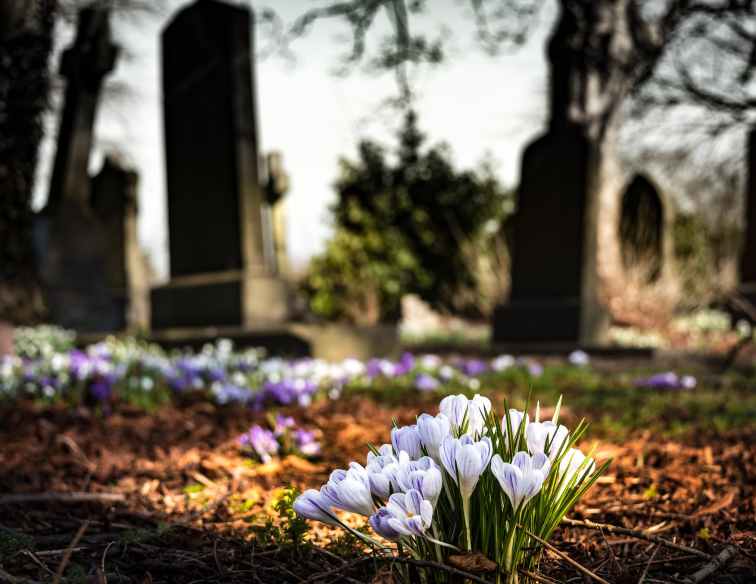
“And thou, most kind and gentle Death,
Waiting to hush our final breath,…
Thou leadest home the child of God,
As Christ before that way hath trod.”-from “All Creatures of Our God and King,” by St. Francis of Assisi
Between the ages of twelve and thirty-one, I spent most of my days in an agonizing trek through the canyon floor of despair. To treat this malady, a whole pharmacy of medication was thrust upon me, none of which did any damn good. It was like living in Mordor; bereft of anything green and growing, dark and shrouded by heavy clouds, with no light save the glowing lava fountain of my rage and resentment, the only emotions that fueled me. The death wish was never far from my fancy; often it was my over-bearing companion. I planned out my demise many times and even attempted my extinction once with half a bottle of bourbon and a couple of handfuls of Tylenol PM. I bring this to light in the happy context of my presently not being suicidal at all for nearly six years. In that time, though fraught with difficulty and sorrow, I have never wanted to end it all, and the reader of this essay should in no way imagine such ideation in me as I share these musings.
Life is ever-pregnant with experience and happiness. Though I’m lazy, I’m still zealous to spend my time on earth at its summit. I have a whole library of poetry to create, essays to compose, and novels to write, as well as a whole humanity to share it with. A multitude of places in Europe, Africa, and Asia await my visitation. And I hope to make friends with nearly everyone in the world. Such ambitions are glittering – and occasionally preposterous – but I know that with just a little effort, I can realize some of them, and thereby realize myself and not “go gently into that good night.”
But more than this, I have a lot of time to make up for. Although my childhood and adolescence were not especially wicked, there is still much to regret. I was often disobedient to my parents and elders, I was a terrible student, I was mouthy, pompous, and obnoxious, and I tormented my poor little brother through bullying for several years (a common crime to be sure, but still a heinous one). In my adulthood, however, I uncover a freight of guilt. Not so much for years of unbridled hedonism but for the fathoms of selfishness, dishonesty, sloth, and waste that attended it. I ever floated in a caustic sea of resentment and hatred, clinging to petty vindictiveness for dear life. I fled from responsibility and dependability as if from a hungry predator. I was as shallow as a rain puddle and as vain as a politician, and I committed a couple or three sins the regret of which I will carry with me every day until my grave.
All this to say, I am not yet ready to stand before God in judgment with so little so far to show for my life, the story of which I want to include more than just the scoundrelry of my twenties; I want it to be about service to others and progress in my character. There is so much unnecessary suffering that I could (in my own small way) help to remedy, so many people who need encouragement and assistance, and so much potential for making myself into a better person. I want to atone for my multitude of misdoings, receive a lighter sentence in Purgatory, and have a finer and nobler soul to present to God before I spend eternity with Him.
Nevertheless, while I wish for three more decades on this planet to accomplish the aforementioned (as well as to do my parents a solid and outlive them) I very much look forward to death. As St. Alphonsus Ligouri noted – when he advised that one should not pine for a long life – the longer we live the more opportunity we have to sin and thus risk estranging ourselves from God. I have offended the Deity enough and I do not relish the frequency with which I continue to do so. Moreover, despite being crammed with glamor and joy, life is exhausting and often demoralizing.
I know from bitter experience how draining a lifetime of intense mental illness is. It evaporates vitality and resilience out of the soul like a raindrop in the hot sun. The noxious fluttering of anxiety, the ten-ton slab of crushing depression, the howling zoo of executive dysfunction, the yawning portal to hell that is psychosis, the maze of confusion that is autism – to say nothing of the slings and arrows of a whole variety of other manifestations of madness, these all chip away at a personality like a grater to any block of cheese. Given enough time, all that’s left are shreds. But even when such agonies are absent, there are pains more mundane but nonetheless excruciating. From the misery of friendlessness to the outrage of injustice, from unrequited love to years of a loveless marriage, from dreams in youth just beyond our reach to the graveyard of said dreams in older age – Hamlet did more than enough to elaborate on such in his famous soliloquy. Though one of the great goals of life should be to find meaning in such sufferings, to endure them and grow from them, they still grind us down and there isn’t much for compensation to get back the joy and peace of which we are robbed. Indeed, what St. Alphonsus said about sin we can say the same about suffering: the longer we live, the more opportunity to hurt and never be healed.
But what might be my most important reason for desiring a short life and the release of death is no doubt a selfish and cowardly one. Simply put, I want to die before my friends do. I am blessed with a number of intimate friendships, those I’ve known for many years or only a few, who light up my life like the Aurora on a winter’s night. Whether through sharing significant commonalities of perspective and interest or for relishing the charms of what’s radically different, my friends have enriched the desert of my existence into a lush and fruitful vineyard. I would be destitute, depraved, and probably dead without them. As life is so rewarding with breath being in their lungs, their deaths to me would be like the loss of a limb; life would never be the same. I get more from my friends, I believe, than they get from me; thus as weak, dependent, and fragile as I am, I could not endure a lifetime of their absence. With every year of life I could gain, I would open myself up to more and more loss, a dark, pallid garden of misery entwining my time on earth with greater amounts of ashen vines. Long life seems to me much less of a blessing.
I have a healthy fear of the act and process of dying. I hope my exit from human society will be as pleasant and quick as possible, and I make sure to always look both ways before crossing the street. Avoiding death is the most basic and powerful of our instincts. But given the manifold and ubiquitous sorrow of life, I think that it is also wise and salubrious to anticipate and be hopeful about this ultimate reality. As an atheist, I was not troubled by the prospect of being dead: I would not exist, thus while I would not enjoy myself, I would also not suffer either. Unending nothingness is not something one has to endure as one will not even be aware that one is gone forever. Now that I am a Christian and believe in an afterlife, although the prospect of punishment does keep me on my toes, I am very confident about the alternative. Trust in God’s mercy, repentance for my sins, and a willingness to keep His commandments and cooperate with His grace gives me assurance that I am on the path to eternal life. And oh, how sweeter that prospect is than the atheist’s rest in nonentity! I will pass from this vale of tears into a country devoid of tears, I will attain the complete realization of myself, I will meet the saints who have gone before me, and I will be transfixed by the face of God forever: to forever love Him, to be loved by Him, and to contemplate His goodness and majesty unto my everlasting salvation.
-
Creation’s Corridors: A Catholic Fantasia (Parts I & II)
I.
It was a solemn and idyllic night –
A blissful bathing of the green moonlight
Trickling through leaves that fluttered like applause
Illumined the Arcadian delight.
Wending my way throughout that midnight hour
I came upon a solitary bower
Whose cozy secrecy exuded sweet
Effusive promises of carnal power.
And there, two spirits who on earth had been
Lovers entwined, clothed only in their skin
Embraced in passion and serenity
Indifferent to both innocence and sin.
They stirred, ascending from their vernal bed.
One clasped the other’s hand and gently led
Them both into the moonglow’s revelation;
They seemed to glitter each from foot to head.
Taking no notice of myself, they paced
Away in eagerness (but without haste)
From covert to deliberate, and moved
In shameless confidence that yet was chaste.
They walked around a rock to climb a stair
Invisible, and vanished in the air
(Not suddenly, but by some slow degrees)
Depriving that fair setting of their fair.
I doubted their ascent was sensual –
Suspected that they gained the nuptial –
Precipitate affection turned to vows,
Transporting flesh into the spiritual.
A whisper said, as if a spoken chime,
“What’s done in gentle darkness is no crime,
But do no harm.” – ‘Twas struggle to dispute
Such a precept so simple and sublime.
But conscience gnawed, as if a hungry worm:
“Though hurt is vacant in the shorter term
It cankers in the marathon of years
And enervates the soul that once was firm.
“Not every romance is to each on par;
Some burn like matches, others like a star;
Some barren rocks may seem, but gold contain;
Some deserts are that look a reservoir.”
I wished the spirits all of Joy’s decanting,
All blessing in both quietude and panting.
But still, for prudence’s sake, resolved to practice
Some caution when beholding what’s enchanting.
II.
There was a poor, conflicted youth whose luck
With women was appalling and pathetic;
And one sad day, the reckless notion struck
The lad that he pursue the life ascetic.
He sprinted into seminary, hoping
To find his life’s calling and some relief.
But taking holy orders ain’t for coping:
His quest for therapy begat more grief.
After the years and tears of this boy’s gloom
God cast him out into the laity –
“Foolish man! Your collar would be your doom,”
He cried. “I sentence you to liberty!
Unchain ambition and your inner strife,
Resolve to quest the earth and live your life!
Then later, find a wife;
Be each the other’s rock in constancy,
And let your love engender family.”

